
Tokay Gecko
Gekko gecko
Animals on display may vary.
Diet
Tokay Geckos are insectivores, feeding mainly on crickets, cockroaches, moths and other insects. Large adults will also eat small lizards, frogs and even baby mice.
Average lifespan
Around 15 to 20 years in human care.
Size
Tokay Geckos are one of the largest geckos in the world, reaching 25 to 35 centimetres (10 to 14 inches) from nose to tail. Males are larger than females.
Weight
Adults typically weigh 150 to 300 grams (5 to 10 ounces).
About
Tokay Geckos are native to Southeast Asia, from northeast India and southern China through Indonesia and the Philippines. They live in rainforests, on cliffs and rocky outcrops, and very often in and around people’s homes. You can meet Tokay Geckos at all three Reptilia locations, including our pair Ragnar and Aslaug at Reptilia Whitby.
Size and behavior
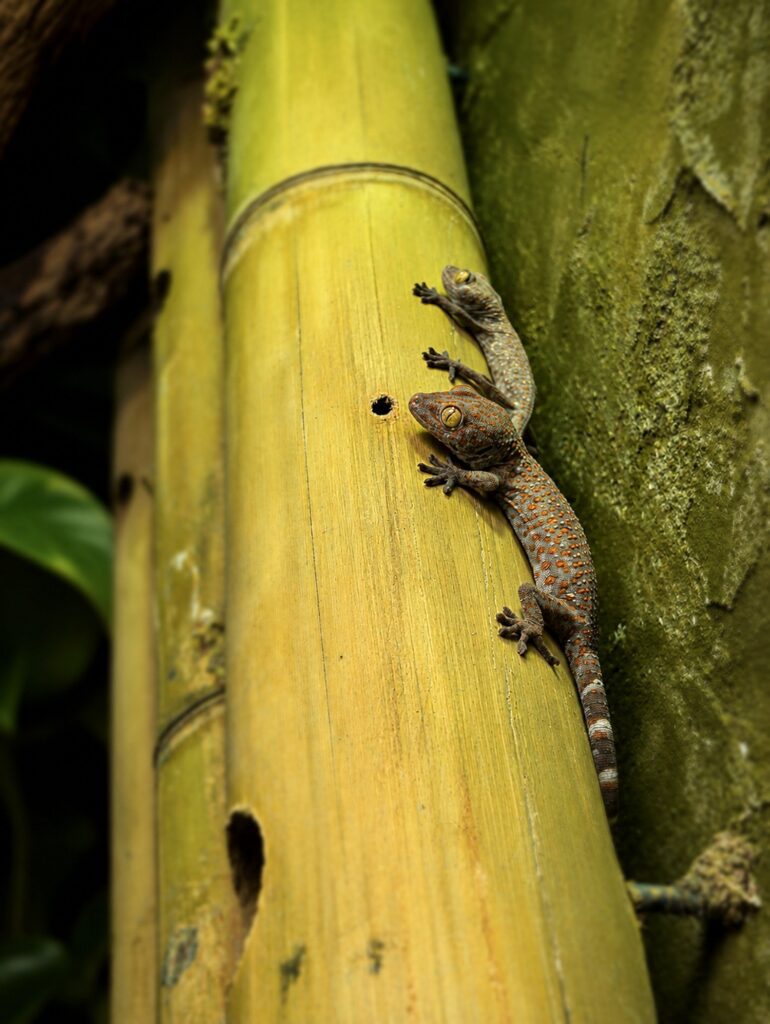
Tokays have a stocky body with blue-grey skin covered in bright orange or red spots, and large golden eyes. Their toe pads are covered in millions of microscopic hairs that let them cling to almost any surface, even glass. They are nocturnal and well known for having big personalities. They can be very territorial, and will open their mouths wide and bite hard if they feel threatened.
Diet and nutrition
In the wild they ambush insects and other small animals at night, often hunting around lights where insects gather. At Reptilia they are fed a varied diet of gut-loaded insects dusted with calcium and vitamins.
Tropical Rainforest
More animals to meet

Conservation status
Listed as Least Concern by the IUCN. They remain widespread across their range, but huge numbers are collected each year for traditional medicine and the pet trade. Tokay Geckos are now listed on CITES Appendix II to help regulate that trade.
Fun fact
The Tokay Gecko is named after its loud call, a barking ‘to-kay!’ or ‘geck-o!’ that males use to claim territory and attract mates. It’s one of the loudest calls of any lizard and can be heard from far away.
Common Name: Tokay Gecko
Also known as: N/A
Visit in person
Animals on display vary by location and may change from day to day.