
Professional Training · Government & Agency Programs
Prepared for encounters of the reptile kind.
Customizable, hands-on training that equips municipal staff, first responders and field professionals to identify, handle and respond to dangerous reptiles and arachnids — safely and with confidence.
6
Specialized program tracks
Flexible
A few hours to several days
3
Ontario training locations
100%
Tailored to your organization
Safety First
Expert-Led
Hands-On
Trusted by
Environment Canada · Department of National Defence · York Region Paramedics · BC Conservation Officer Service · Cities of Vaughan, Toronto & Mississauga
Specialized Programs
Go deeper with our flagship courses.
Full course outlines for two of our most in-demand programs — built for the Canadian Armed Forces and Environment and Climate Change Canada.
Canadian Armed Forces
Military Training Courses
Reptile risk mitigation for personnel deployed to high-biodiversity environments — from threat recognition to golden-hour field care.
4 modules · Live specimen training · On-site at your base
Explore Military Courses →Case Study · ECCC
Wildlife Enforcement Training
The hands-on program we delivered for Environment and Climate Change Canada — and the 130-page Learner's Guide we wrote for it.
4 modules · CITES identification · Exclusive learner's guide
See the ECCC Training →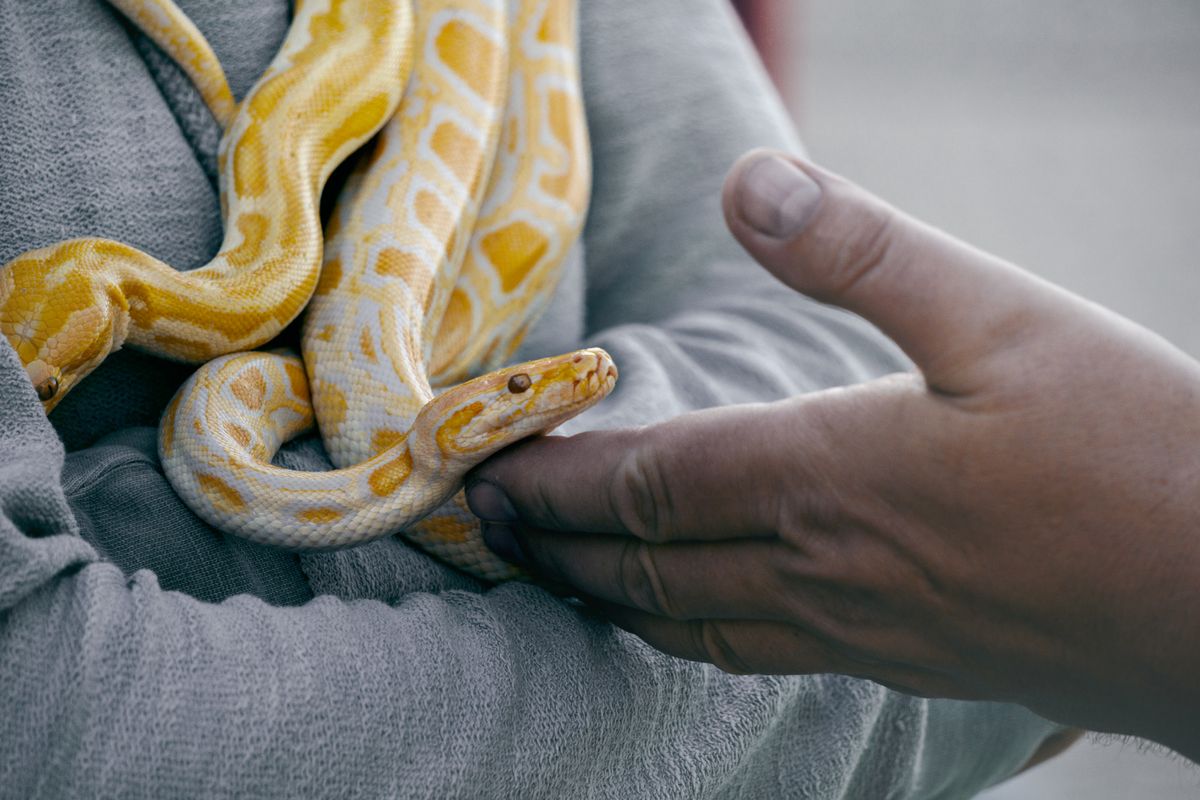
Led by experts
Every course is taught by Reptilia's senior instructors — specialists in handling, safety and reptile biology.
The Ultimate Seminar
Expert training for the professionals on the front line.
Exotic pets are more common in our communities than ever — and so are the calls that put staff face-to-face with venomous snakes, large constrictors, crocodilians and dangerous arachnids. Reptilia's Government Programs give your team practical, real-world skills for exactly those moments.
Every program is built around your organization's mandate, risks and day-to-day realities, so participants learn what's relevant to the situations they will actually face — in sessions ranging from a few focused hours to several in-depth days.
“We look forward to collaborating with your team to provide specialized training that enhances safety and preparedness.”
Core Curriculum
What your team will master.
Choose the modules that fit your mandate. Each is delivered hands-on, with live animals and real-world scenarios.
01
Identification & Classification
Recognize dangerous or illegal reptiles and arachnids and accurately assess the threat they pose.
02
Safe Capture & Handling
Proven techniques and equipment for controlling dangerous species with confidence and minimal risk.
03
Avoidance & Situational Awareness
Scene-management strategies that minimize the chance of a dangerous encounter in the first place.
04
Short-Term Husbandry
Essential care guidance for organizations that must temporarily house seized or surrendered animals.
05
Emergency Response
First-aid steps and on-site protocols for venomous snakebites and stings, when every minute counts.
06
Local Resources & Contacts
A direct line to regional experts and support networks for identification, removal and emergency help.
Available Programs & Training
Built for the people who answer the call.
Six specialized tracks, each shaped by years of hands-on work alongside the agencies that rely on them.

Track 01 · Public Safety
Police & Fire Services
At crime scenes and fires, officers may encounter exotic pets — some harmless and legal, others illegal and highly dangerous. Learn to identify and avoid hazards, manage emergencies such as venomous snakebite, and know exactly who to call for identification and removal.
Hazard ID · Scene safety · Snakebite response

Track 02 · Medical
Paramedics, Nurses & Doctors
Private keeping of venomous snakes is on the rise, with confiscations and bites across the GTA. Snakebite is a complex, unique medical emergency — this course prepares clinical staff with the specific procedures that improve patient outcomes.
Delivered for York Region Paramedics & local hospitals
Track 03 · Municipal
Municipal Animal Services
As reptile ownership grows, so do abandonments and surrenders. Officers learn the unique husbandry needs of commonly kept species, plus safe capture and handling procedures for confiscation situations.
Partnered with the Cities of Vaughan, Toronto & Mississauga
Track 04 · Enforcement
Illegal Import Control
Border and inspection services protect the public, wild spaces and animal welfare. It's highly hazardous work demanding skill in scene management, identification, handling and emergency response.
Trusted by Environment Canada & BC Conservation Officer Service
See the ECCC Training →
Track 05 · Defence
Military Training
Deployments often reach regions rich in venomous and poisonous native species. Troops learn the dangerous species of their area of operation, how to prevent encounters, and emergency procedures for snakebite and scorpion sting.
Delivered for the Department of National Defence
View Military Courses →
Track 06 · Research
University Animal Care & Researchers
Lab and field research can put students and technicians close to dangerous animals. Courses are customized per project — field safety and identification, lab husbandry and safety protocols, and bite or sting emergency procedures.
Custom-built around your project
Tools of the Trade
The equipment and protocols behind every safe capture.
Depending on your program, participants train with the same tools and procedures our keepers use every day.
Know the bite
Recognizing a venomous bite — and knowing exactly what to do in the first critical minutes — is at the heart of every course.
Snake Hooks
Controlled, hands-off lifting and guiding of snakes from a safe working distance.
Secure Containment
Safe transfer into bins and containers for transport or short-term holding.
Protective Equipment
Choosing and using the right PPE for the species and the situation.
Hazard Assessment
Reading the scene, identifying the animal and setting a safe perimeter.
Venomous Species ID
Telling dangerous species from harmless look-alikes — local and exotic.
First Aid & Response
What to do — and what never to do — after a bite or sting.
Snakebite Emergency
Call 911 immediately.
Keep the person calm and as still as possible, remove rings, watches and tight clothing near the bite, and note the time it happened. Do not cut the wound, try to suck out venom, apply ice or use a tourniquet.
How It Works
From first call to field-ready, in three steps.
I
Tell us your mandate
Share your team's role, the species and situations you encounter, and what you need participants to walk away with.
II
We tailor the course
Our instructors select the right modules and set the depth — from a focused few-hour briefing to a multi-day program.
III
Your team trains hands-on
Participants learn directly from Reptilia's experts and leave with the skills, protocols and contacts to act with confidence.
Book Your Course
Select your closest location.
Customize your course online, or speak with our bookings team directly.
Southwestern Ontario
Reptilia London
226-721-8522
bookings.london@reptilia.org
Preparedness starts with the right training.
Public safety · Environmental agencies · Law enforcement · Healthcare · Defence · Research