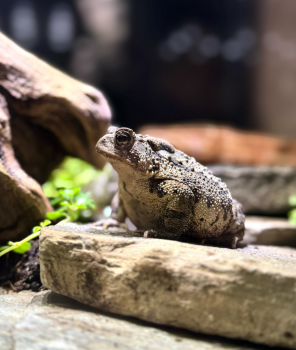
American Toad
Common Name: American Toad
Scientific Name: Anaxyrus americanus
Names: N/A
Locations: Vaughan
Diet
American Toads are insectivores, feeding primarily on insects, spiders, slugs, worms, and other small invertebrates.
Average lifespan
In the wild, American Toads typically live 5 to 10 years, although some individuals have been known to live over 15 years.
Size
Adult American Toads usually measure 5 to 11 centimeters (2 to 4.5 inches) in length.
Weight
Adult American Toads generally weigh between 20 and 80 grams (0.7 to 2.8 ounces).
About
American Toads are one of the most widespread amphibians in North America, found throughout much of eastern Canada and the United States. They inhabit forests, fields, gardens, wetlands, and suburban areas, often staying hidden under logs, rocks, or leaf litter during the day.
Size and behavior
American Toads are primarily nocturnal and emerge at dusk to hunt. They move using a combination of short hops and walking movements. During the breeding season, males produce a long, musical trill to attract females. When threatened, they may inflate their bodies to appear larger and deter predators.
Diet and nutrition
American Toads are opportunistic predators that consume a wide variety of invertebrates. Their sticky tongue can rapidly capture prey with remarkable accuracy. By feeding on insects and other small pests, they play an important role in maintaining ecosystem balance.
Conservation status
American Toads are currently classified as Least Concern by the IUCN. They remain widespread and common across much of their range, although local populations can be affected by habitat loss, road mortality, pesticides, and disease.
Fun fact
American Toads have specialized glands behind their eyes called parotoid glands that produce a mild toxin. This natural defense helps discourage predators from trying to eat them, making the toad a surprisingly well-protected amphibian despite its small size.