

Brazilian Bird Eating Tarantula
Lasiodora parahybana
See them at Vaughan
Animals on display may vary.
Diet
Brazilian Bird Eating Tarantulas are carnivores. Despite the name, they don’t specialize in birds – most of their diet is insects and other arthropods, plus the occasional small vertebrate they can overpower.
Average lifespan
Females can live 15 years or more. Males live much shorter lives, usually only a year or two after reaching maturity.
Size
One of the largest spiders in the world, rivalling the goliath birdeater, with a diagonal leg span that can reach 25 to 28 centimetres (10 to 11 inches).
Weight
Adults can weigh up to around 100 grams (3.5 ounces).
About
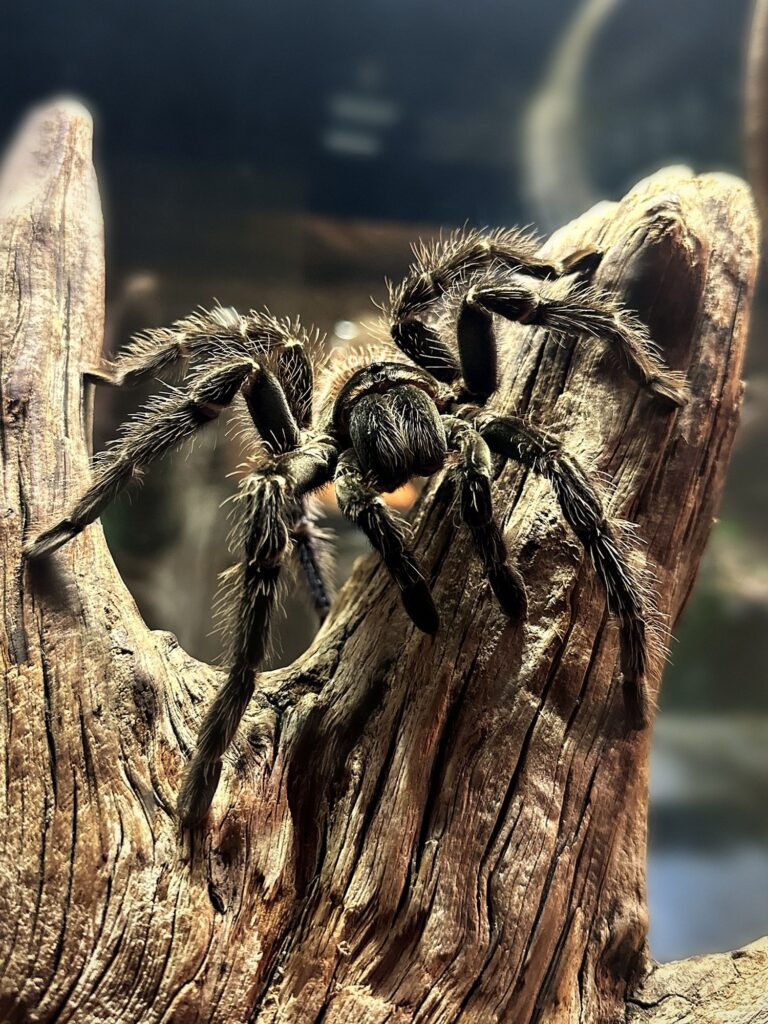
Meet Aragog, the Brazilian Bird Eating Tarantula who calls Reptilia Vaughan home. His species is native to the Atlantic forest of northeastern Brazil – the scientific name comes from the state of Paraíba – where they live on the forest floor, sheltering in burrows, under logs and among roots.
Size and behavior
These are large, heavy-bodied spiders covered in long hairs that glow pinkish in the right light. They are nocturnal ambush hunters, waiting near their shelter and relying on vibrations to detect prey. Like most tarantulas from the Americas, they carry urticating hairs on the abdomen that they can flick off in defence; the barbed hairs cause temporary itching and irritation. Their venom is very mild to people – a bite causes pain, itching and minor swelling, and the sheer size of the fangs is more of a concern than the venom.
Diet and nutrition
In the wild they eat whatever they can overpower, mainly crickets, cockroaches and other large invertebrates, with the odd small frog, lizard or rodent. At Reptilia, Aragog is fed a varied diet of appropriately sized feeder insects. Tarantulas can go long periods without eating, especially before a moult.
Tropical Rainforest
More animals to meet
Conservation status
Not yet evaluated by the IUCN. The species is common in the pet trade thanks to captive breeding, but its Atlantic forest habitat is one of the most threatened ecosystems in South America due to deforestation and development.
Fun fact
A single egg sac can hold anywhere from 1,000 to 2,000 eggs! The spiderlings are tiny, and only a small fraction survive to adulthood – they are eaten by many predators, including each other.
Common Name: Brazilian Bird Eating Tarantula
Also known as: Aragog
Visit in person
Animals on display vary by location and may change from day to day.