
Western Hognose Snake
Heterodon nasicus
Animals on display may vary.
Diet
Western Hognose Snakes are carnivores. In the wild they are famous for eating toads, but they also take frogs, lizards, small rodents and reptile eggs.
Average lifespan
Typically 20 to 25 years in human care.
Size
Females are much larger than males, reaching around 60 to 90 centimetres (2 to 3 feet). Males usually stay under 50 centimetres (20 inches).
Weight
Adults typically weigh 60 to 350 grams (2 to 12 ounces), with females much heavier than males.
About
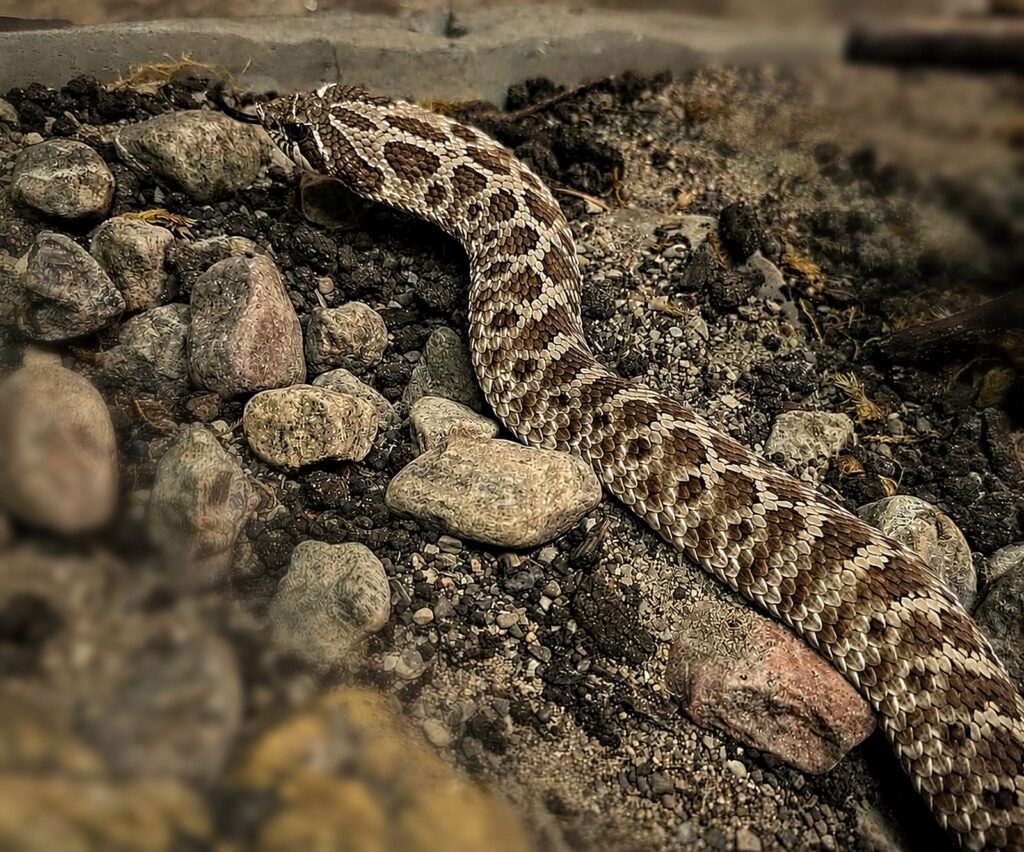
Western Hognose Snakes are found across the prairies and dry grasslands of central North America, from southern Alberta, Saskatchewan and Manitoba down through the Great Plains into northern Mexico. They prefer sandy or gravelly soil where they can burrow easily. You can meet them at all three Reptilia locations.
Size and behavior
These are stout, heavy-bodied snakes with a sharply upturned snout that works like a shovel for digging through loose soil. When approached, a hognose puts on a dramatic defensive display: it flattens its neck into a hood, hisses loudly and mock strikes. If that doesn’t work, plan B is to play dead – flipping onto its back, letting its tongue hang out and giving off a foul smell.
Diet and nutrition
In the wild they dig out buried toads and other prey with their upturned snouts. They are rear-fanged and have mild venom that helps subdue prey, but it is not considered dangerous to people. At Reptilia they are fed appropriately sized rodents.
Savanna & Grassland
More animals to meet
Conservation status
Listed as Least Concern by the IUCN. In Canada, prairie populations are affected by habitat loss from agriculture and development, as well as road mortality. Plains Hognose Snakes are assessed as a species of Special Concern in Canada.
Fun fact
Their play-dead act is so committed that if you flip a ‘dead’ hognose right-side up, it will often roll straight back onto its back – as if to insist it really is dead!
Common Name: Western Hognose Snake
Also known as: N/A
Visit in person
Animals on display vary by location and may change from day to day.