

White’s Tree Frog
Litoria caerulea
Animals on display may vary.
Diet
White’s Tree Frogs are insectivores, feeding mainly on crickets, moths, cockroaches and other insects. Large adults will occasionally eat small mice or other frogs.
Average lifespan
Around 15 to 20 years in human care, which is very long for a frog.
Size
Adults typically reach 7 to 11 centimetres (3 to 4 inches) long, with females larger than males.
Weight
Adults usually weigh around 40 to 90 grams (1.5 to 3 ounces).
About
White’s Tree Frogs are native to northern and eastern Australia and southern New Guinea, where they live in forests, woodlands and swamps – and often around homes, water tanks and even toilets! You can meet them at Reptilia Vaughan and London. They’re named after John White, the surgeon who first described them in 1790.
Size and behavior
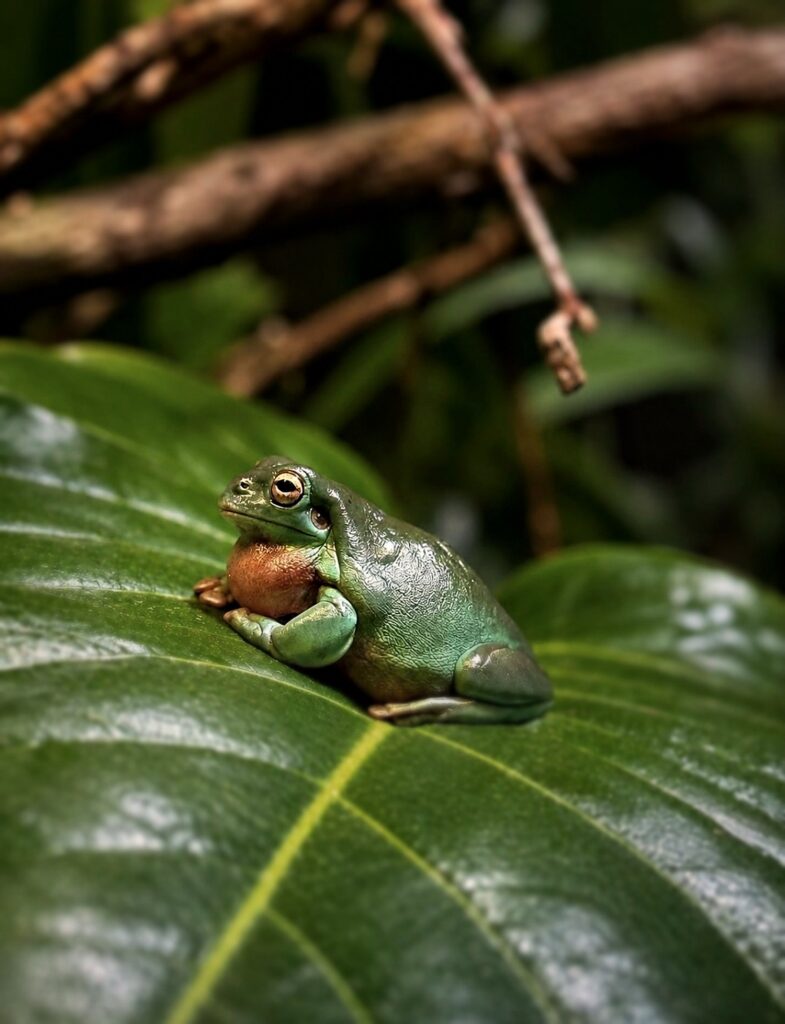
These are plump, gentle frogs with smooth waxy skin that ranges from blue-green to emerald, and can darken to brown depending on temperature and mood. Folds of fat over the eyes give them their sleepy look and their nickname, the ‘dumpy tree frog’. Large sticky toe pads make them excellent climbers. They are nocturnal, resting during the day and hunting at night.
Diet and nutrition
In the wild they sit and wait for insects to come close, then grab them with a quick lunge and a sticky tongue. At Reptilia they are fed gut-loaded feeder insects dusted with calcium and vitamins to keep their bones and skin healthy.
Tropical Rainforest
More animals to meet
Conservation status
Listed as Least Concern by the IUCN. They remain common across much of their range, though like many frogs they can be affected by habitat loss, pollution and chytrid fungus, a disease that has devastated amphibians worldwide.
Fun fact
Their waxy skin helps them hold onto moisture, letting them live in drier places than most frogs. Scientists are also studying chemicals in their skin secretions for antibacterial and antiviral properties.
Common Name: White’s Tree Frog
Also known as: N/A
Visit in person
Animals on display vary by location and may change from day to day.