Leopard Tortoise
Common Name: Leopard Tortoise
Scientific Name: Stigmochelys pardalis
Names: N/A
Locations: Whitby, Vaughan
Diet
Leopard Tortoises are herbivores, feeding primarily on grasses, weeds, succulents, flowers, and other fibrous vegetation.
Average lifespan
Leopard Tortoises can live 50 to 100 years, with some individuals exceeding a century in age.
Size
Adults typically reach 30 to 70 centimeters (12 to 28 inches) in shell length, making them one of Africa’s largest tortoise species.
Weight
Adult Leopard Tortoises can weigh between 15 and 45 kilograms (33 to 100 pounds), with exceptionally large individuals exceeding this range.
About
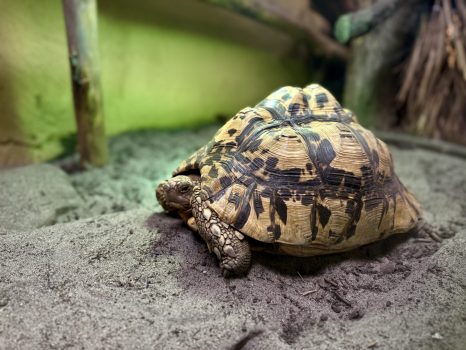
Leopard Tortoises are native to eastern and southern Africa, where they inhabit grasslands, savannas, thorn scrub, and semi-arid regions. They are named for the beautiful leopard-like markings on their shells, which provide camouflage among grasses and vegetation.
Size and behavior
Leopard Tortoises are primarily active during the day and spend much of their time grazing. They are generally solitary and peaceful animals, travelling surprisingly long distances in search of food and suitable habitat. Unlike many tortoise species, they do not dig extensive burrows and often seek shelter under bushes, rocks, or abandoned animal dens.
Diet and nutrition
As strict herbivores, Leopard Tortoises require a high-fibre, calcium-rich diet dominated by grasses and leafy plants. Their digestive system is specially adapted to process tough vegetation, and they obtain much of their water from the plants they consume. In the wild, grazing on a wide variety of plants helps maintain healthy shell and bone development.
Conservation status
Leopard Tortoises are currently classified as Least Concern by the IUCN. However, some local populations face threats from habitat loss, wildfires, road mortality, and collection from the wild. Protected habitats and conservation programs help maintain healthy populations across much of their range.
Fun fact
Leopard Tortoises are one of the few tortoise species capable of swimming short distances when necessary. Their large lungs also help them float, allowing them to cross flooded areas that would stop many other tortoises.