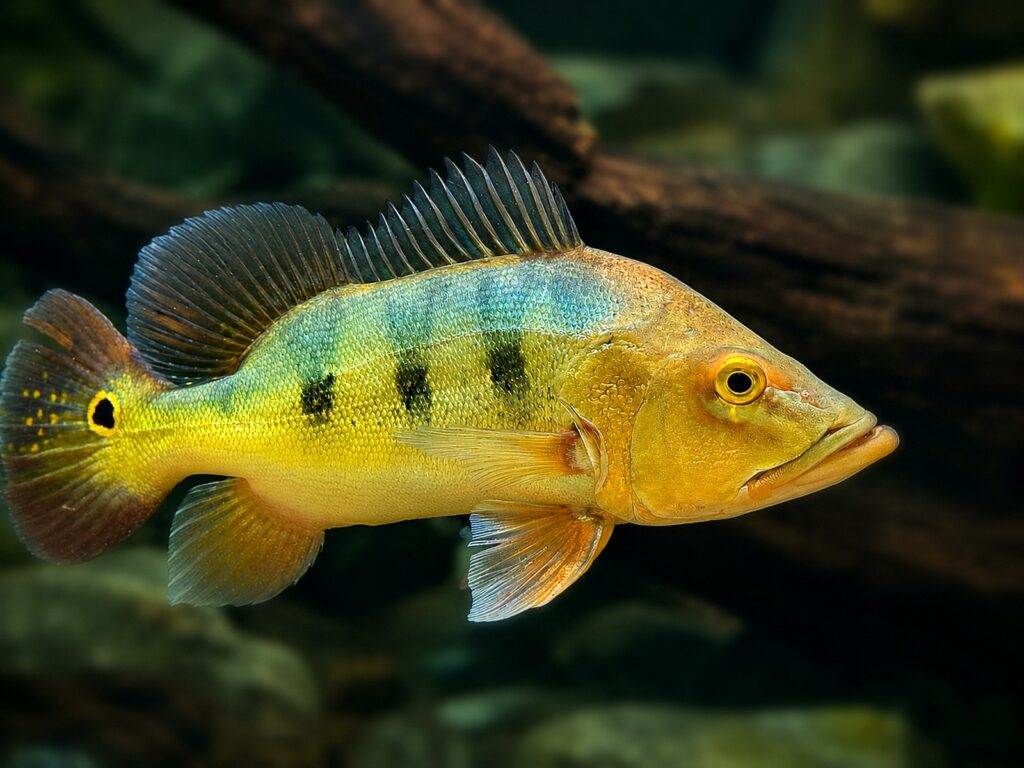
Monoculus Peacock Bass

Cichla monoculus
See them at Whitby

Animals on display may vary.

Diet

Monoculus Peacock Bass are carnivores, feeding mainly on smaller fish, along with shrimp and other aquatic invertebrates.

Average lifespan

Around 10 to 15 years in human care.

Size

Adults commonly reach 40 to 50 centimetres (16 to 20 inches), with large individuals growing over 60 centimetres (24 inches).

Weight

Adults typically weigh 1 to 3 kilograms (2 to 6.5 pounds).

About

Monoculus Peacock Bass are found throughout the Amazon River basin in South America, living in slow-moving rivers, oxbow lakes and seasonally flooded forest. You can find ours at Reptilia Whitby. Despite their name, peacock bass aren’t true bass – they belong to the cichlid family.

Size and behavior

These fish have a sleek, powerful body in bright yellow-gold with a blue-green back, three dark bars along the side and orange-red fins. Their best-known feature is the large black eyespot ringed in gold at the base of the tail. They are daytime hunters that cruise open water and ambush prey with sudden bursts of speed.

Diet and nutrition

In the wild they hunt small fish such as characins and other cichlids, swallowing them whole with their large mouths. At Reptilia they are fed a varied diet of appropriately sized fish and other protein-rich foods to keep them healthy and active.
Tropical Rivers & Lakes

Conservation status

Listed as Least Concern by the IUCN. They are widespread across the Amazon and an important food and sport fish. Populations introduced outside their native range have become invasive in some regions, where they prey heavily on native fish.

Fun fact

The name monoculus means “one eye” – a nod to the eyespot on the tail. The fake eye may help confuse predators, or prey, about which end of the fish is the head!
Common Name: Monoculus Peacock Bass
Also known as: N/A

Visit in person

Animals on display vary by location and may change from day to day.