
Diet
Weber’s Sailfin Dragons are omnivores, feeding on insects and other small animals as well as fruit, leaves and flowers.
Average lifespan
Weber’s Sailfin Dragons typically live 10 to 15 years in the wild.
Size
Adults usually reach 60 to 90 centimeters (2 to 3 feet) in total length, including the tail, making them the smallest of the sailfin lizards.
Weight
Adult Weber’s Sailfin Dragons generally weigh between 1.4 and 2.3 kilograms (3 to 5 pounds).
About
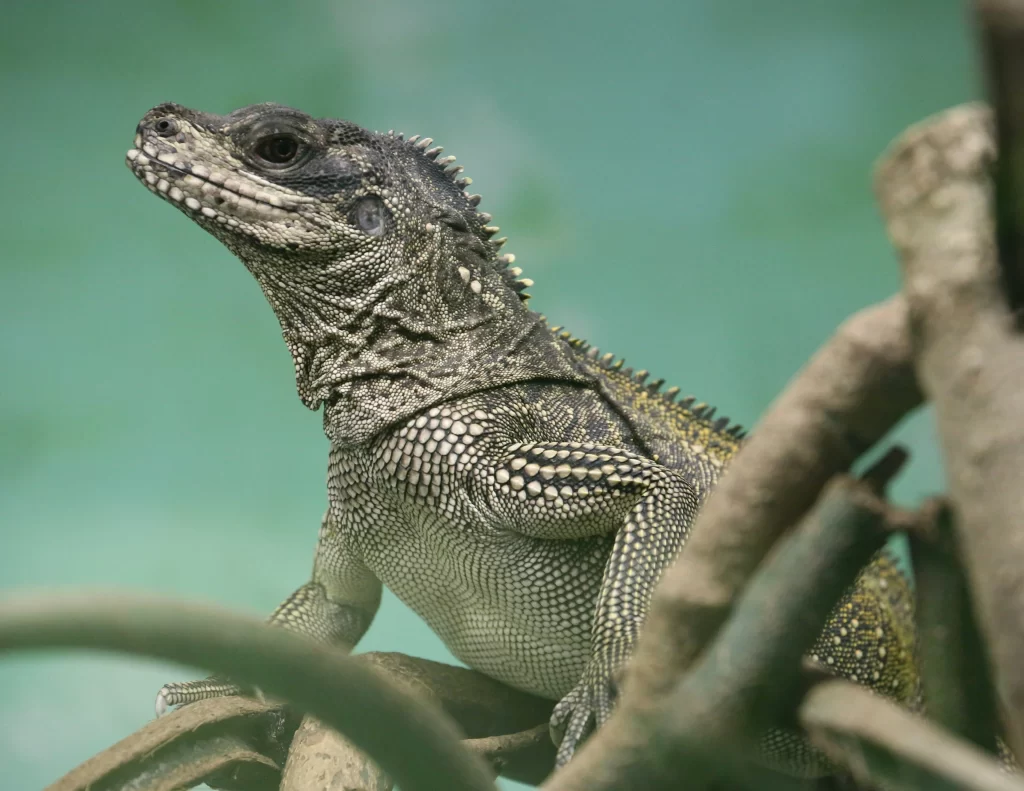
Weber’s Sailfin Dragons are found only on the islands of Halmahera and Ternate in the Maluku Islands of Indonesia. They live in rainforests and woodlands, almost always close to rivers, streams and marshes. They are named after the zoologist Max Weber, who studied the animals of the Indonesian islands.
Size and behavior
Weber’s Sailfin Dragons are active during the day and spend much of their time basking on branches that hang over the water. When threatened, they drop into the water below and swim away using their tall, flattened tails. Males have a taller sail along their tail than females, and these lizards are able to run on their hind legs.
Diet and nutrition
Weber’s Sailfin Dragons are opportunistic feeders that eat whatever small animals they can overpower, along with a wide variety of fruit, flowers and leaves. They forage both in trees and along the water’s edge, which gives them access to a broad range of food.
Tropical Rainforest
More animals to meet

Conservation status
Weber’s Sailfin Dragons are classified as Vulnerable by the IUCN. Their very small range makes them especially sensitive to habitat loss from logging and land clearing, and they are also hunted for meat. Some live within Aketajawe-Lolobata National Park on Halmahera, which helps protect their forest habitat.
Fun fact
Their scientific name, Hydrosaurus, means “water lizard,” and they are such capable runners that they can sprint on their hind legs.
Common Name: Weber’s Sailfin Dragon
Also known as: N/A
Visit in person
Animals on display vary by location and may change from day to day.