
Spotted Salamander
Common Name: Spotted Salamander
Scientific Name: Ambystoma maculatum
Names: N/A
Locations: Whitby, Vaughan & London
Diet
Preys upon earthworms, slugs, snails, spiders, millipedes, centipedes, insects, algae, and other invertebrates, using a sticky tongue to capture prey in leaf litter and soil
Average lifespan
Typically around 20 years, with some individuals documented living up to 30 years
Size
15–25 cm (6–10 in) in total length
Weight
Adults typically weigh around 12.8 g (0.45 oz) on average
About
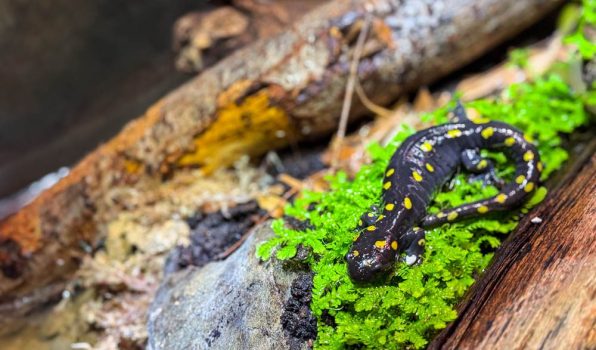
A stout mole salamander native to the eastern United States and Canada, recognizable by two irregular rows of yellowish-orange spots on a dark body; it is the state amphibian of Ohio and South Carolina
Size and behavior
Fossorial and nocturnal—rarely seen except after rains—these salamanders migrate en masse to vernal pools during spring’s “Big Night,” can autotomize their tails, and secrete a toxic milky fluid when threatened
Diet and nutrition
As ambush predators, adults feed on invertebrates in the forest floor; larvae are aggressive predators, sometimes cannibalizing smaller conspecifics when food is scarce
Conservation status
Listed as Least Concern by the IUCN due to its wide distribution and stable overall population; however, it relies on vernal pool habitats vulnerable to destruction and acid rain
Fun fact
Its embryos host a unique endosymbiotic green alga (Chlorococcum amblystomatis), which supplies oxygen and removes nitrogenous wastes—a rare example of vertebrate cells housing a microbe