Axolotl
Common Name: Axolotl
Scientific Name: Ambystoma mexicanum
Names: Lil Cutie
Locations: Whitby, Vaughan & London
Diet
Carnivorous; in the wild they feed on aquatic invertebrates (worms, insect larvae, crustaceans), small fish, and tadpoles. They use suction feeding to draw prey into their mouths.
Average lifespan
Approximately 10–15 years in their native lake environment.
Size
Adults typically reach lengths of 17–30 cm (7–12 in).
Weight
Generally between 20–100 g (0.7–3.5 oz), depending on age and available food.
About
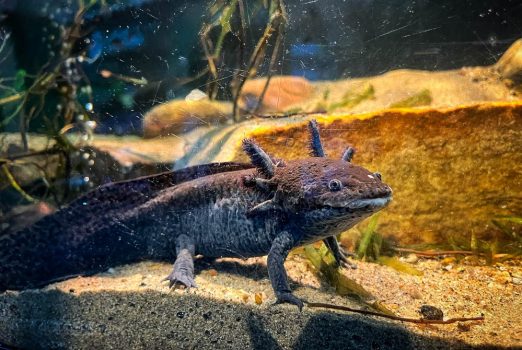
The axolotl is a neotenic salamander endemic to the remnants of Lake Xochimilco near Mexico City. Unlike most amphibians, it retains its larval gills and remains fully aquatic throughout its life.
Size and behavior
Axolotls have elongated bodies with broad heads, feathery external gills, and a fin that runs down their back and tail. They are relatively sedentary, often resting on the bottom during the day and becoming more active at dusk and night.
Diet and nutrition
They are opportunistic feeders, snapping up any suitably sized prey. Their diet must be high in protein to support growth and tissue maintenance.
Conservation status
Critically Endangered (IUCN Red List) due to habitat loss, water pollution, and invasive species in their native range.
Fun fact
Axolotls can regenerate entire limbs, spinal cord segments, heart tissue, and even parts of their brain without scarring—making them a key model in regeneration research.