
Map Turtle
Graptemys spp. (includes various species such as Graptemys g
See them at London
Animals on display may vary.
Diet
Map Turtles are omnivorous, with a diet consisting of aquatic vegetation, insects, crustaceans, mollusks, and small fish. Females often consume more hard-shelled prey due to their larger jaw size.
Average lifespan
In the wild, Map Turtles typically live around 20 to 30 years, though they can live longer in optimal conditions.
Size
Male Map Turtles are smaller, averaging 10 to 16 cm (4 to 6 inches) in shell length, while females can reach 15 to 27 cm (6 to 11 inches).
Weight
Adult Map Turtles can weigh between 0.5 to 2 kg (1 to 4.4 pounds), with females generally being larger and heavier than males.
About
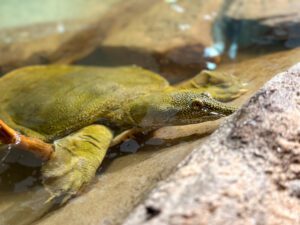
Map Turtles are native to North America, inhabiting rivers, streams, and large lakes with sandy or muddy bottoms. They are named for the intricate, map-like patterns on their carapace, which resemble contour lines. These turtles prefer environments with abundant basking sites and calm, clean water.
Size and behavior
Map Turtles are highly aquatic and spend most of their time in the water, though they frequently bask on logs or rocks to regulate their body temperature. They are shy and wary, often diving into the water at the slightest disturbance. They are diurnal, being most active during the day.
Diet and nutrition
Map Turtles feed mainly on aquatic invertebrates such as snails, mussels and insects, along with some plants and small fish. Females develop much larger heads and jaws than males, which lets them crush hard-shelled prey.
Temperate Forests & Ponds




Conservation status
The conservation status of Map Turtles varies by species. Some, such as the Common Map Turtle, are listed as Least Concern, while others face threats from habitat destruction, pollution, and human activities. Conservation efforts include habitat preservation and water quality improvement.
Fun fact
Map Turtles are known for their excellent swimming abilities, aided by their streamlined shell and strong limbs. They are also sexually dimorphic, with females significantly larger than males. This size difference allows females to consume larger and harder prey items, reducing competition for food resources.
Common Name: Map Turtle
Also known as: N/A
Visit in person
Animals on display vary by location and may change from day to day.