
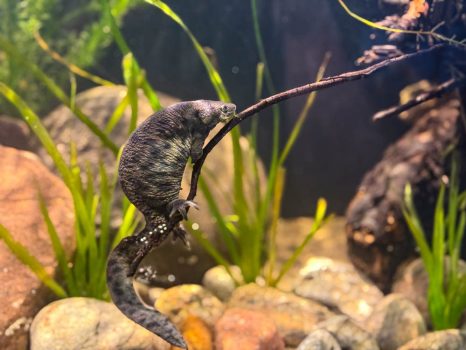
Spanish Ribbed Newt
Common Name: Spanish Ribbed Newt
Scientific Name: Pleurodeles waltl
Names: N/A
Locations: Whitby, Vaughan & London
Diet
Opportunistic carnivore feeding on aquatic invertebrates, small fish, tadpoles, worms, and carrion
Average lifespan
In the wild, about 7–10 years; in captivity, 8–12 years with a maximum recorded of ~19.5 years
Size
Adults reach 15–30 cm (6–12 in) in total length.
Weight
Specific adult weights aren’t well documented.
About
The largest European newt, endemic to the Iberian Peninsula and parts of North Africa. It retains larval features (external gills, finned tail) into adulthood, a condition known as neoteny, and lives in ponds, cisterns, and wells.
Size and behavior
Primarily aquatic and nocturnal. They rarely leave the water except to migrate en masse to temporary pools for breeding. When threatened, they can push their ribs through their skin to form defensive spikes.
Diet and nutrition
Uses a rapid suction-feeding strike to consume insects, molluscs, crustaceans, tadpoles, and small fish. Highly adaptable, feeding on whatever prey is available in its habitat.
Conservation status
Listed as Least Concern by the IUCN, though local populations can decline due to habitat loss, water pollution, invasive predators (e.g., fish, crayfish), and road mortality during migrations.
Fun fact
Their unusual defense mechanism involves projecting their ribs through their body wall, effectively creating a spiked armor that deters would-be predators.